
How to Sell Fonts Online: The Complete Guide for Type Designers
6 months ago · 19 min read
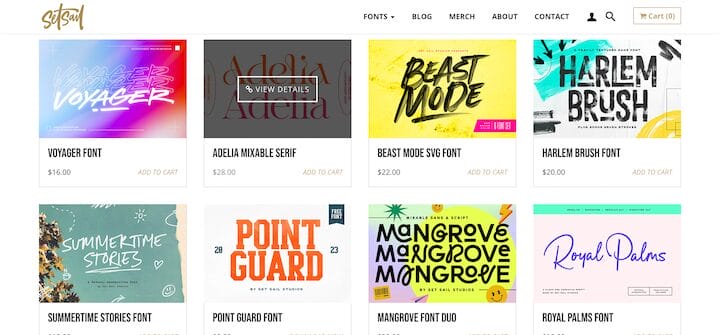
Typography is everywhere. Every website, app, advertisement, book, logo, and social media post uses fonts. And behind many of those fonts is an independent type designer who created them and sells them to other creatives and businesses. If you have a knack for lettering, calligraphy, or type design, selling fonts online is one of the most rewarding digital product businesses you can build.
The global font market is worth billions of dollars and is growing steadily year over year. While large type foundries like Adobe, Monotype, and Google dominate the mainstream market, there is a thriving ecosystem of independent font designers selling directly to customers through their own stores and marketplaces. Some independent type designers earn six figures annually from font sales alone.
In this guide, we will cover everything you need to know about creating, licensing, pricing, and selling fonts online. Whether you are a seasoned calligrapher looking to monetize your craft or a graphic designer exploring type design for the first time, this is your complete roadmap.
Why Selling Fonts Is a Great Digital Product Business
Fonts are one of the most evergreen digital products you can create. Unlike trends that come and go, a well designed font can sell consistently for years or even decades. Some of the most popular fonts on the market were created over ten years ago and still generate steady revenue for their creators.
The economics of selling fonts are excellent. You create the font once and sell it unlimited times. There is no inventory, no shipping, no manufacturing cost. Your only investment is the time and skill it takes to design the typeface. Once it is done and listed, it can generate passive income indefinitely.
The buyer pool is enormous and diverse. Graphic designers, web developers, branding agencies, small business owners, social media managers, wedding planners, authors, and even individual consumers purchase fonts regularly. A single font can appeal to multiple market segments simultaneously.
Fonts also have natural upselling potential. You can start with a single font weight and expand it into a full font family with multiple weights, italics, and alternate characters. Each expansion adds value and gives you a reason to re engage existing customers. Many type designers also create bundles and subscription offers that increase their average revenue per customer.
Types of Fonts That Sell Well
Understanding which types of fonts are in demand will help you focus your design efforts on products that have the best chance of selling.
Script and Handwritten Fonts
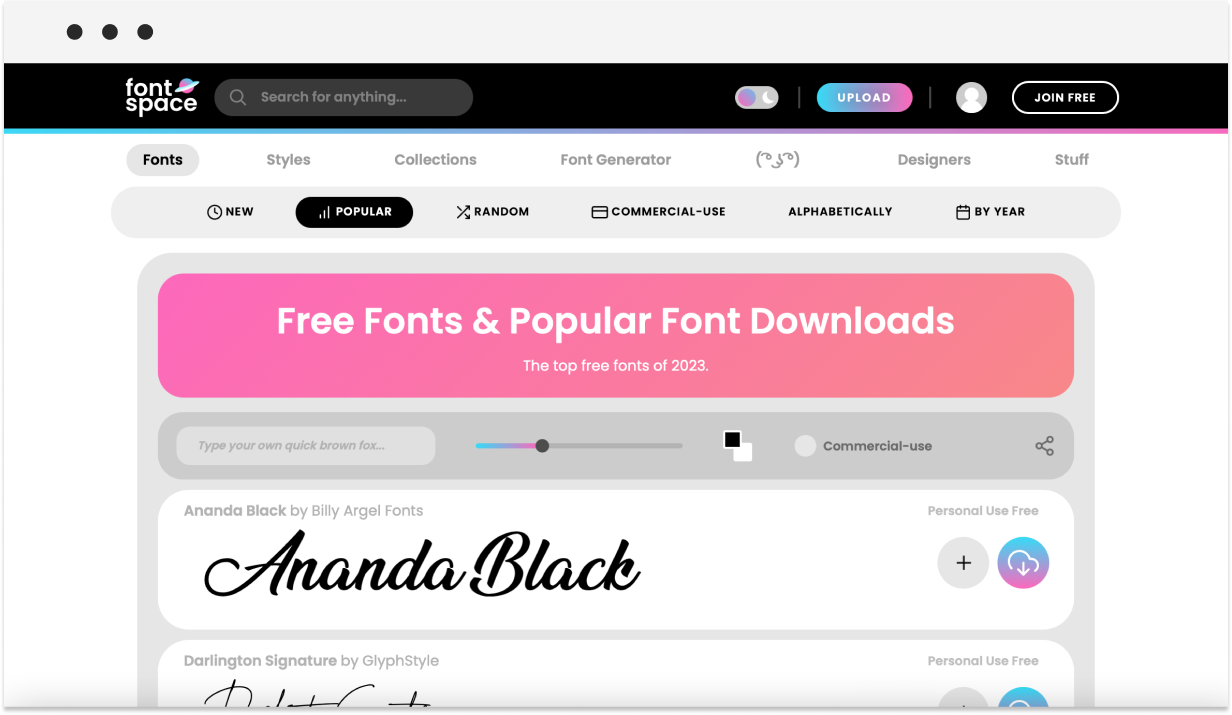
Script fonts are consistently among the best sellers in the independent font market. They are popular for wedding invitations, social media graphics, branding, packaging, and greeting cards. The key to success with script fonts is creating something that feels authentic and unique. Buyers are looking for character and personality that they cannot get from the thousands of free script fonts available online.
Font Categories With Highest Demand:
• Script and handwritten fonts — wedding invitations, branding, social media quotes
• Sans serif modern fonts — clean branding, web design, app interfaces
• Display and decorative fonts — packaging, posters, merchandise, headlines
• Serif editorial fonts — magazines, book covers, luxury branding
• Monospace and code fonts — developer tools, tech branding, retro aesthetics
Display and Decorative Fonts
Display fonts are designed to make a statement. They are used for headlines, logos, posters, and any application where the typography needs to grab attention. Bold, quirky, retro, futuristic, and experimental display fonts all have their audiences. These fonts tend to be project specific, meaning buyers purchase them for a particular design rather than everyday use.
Sans Serif Fonts
Clean, modern sans serif fonts are workhorses of the design world. They are used in branding, websites, mobile apps, presentations, and nearly every type of professional communication. A well designed sans serif with multiple weights and good language support can become a steady seller because of its versatility.
Serif Fonts
Serif fonts convey elegance, authority, and tradition. They are popular for editorial design, book covers, luxury branding, and academic publications. The market for high quality serif fonts is smaller but tends to command higher prices because the buyers are often professional designers and agencies.
Monospace and Coding Fonts
With the growth of the tech industry and coding culture, there is a growing market for monospace fonts designed for programming and terminal use. Developers are willing to pay for fonts that are easy to read, have clear character differentiation, and look great in their IDE. This is a niche market but one with dedicated, repeat buyers.
Font Bundles and Collections
Bundling multiple fonts together at a discounted price is an extremely effective sales strategy. A "Modern Branding Font Collection" with five complementary fonts for $39 can be more attractive to buyers than selling each font individually for $15. Bundles increase your average order value and give buyers the feeling of getting a great deal.
How to Create a Font From Scratch
Creating a professional font is a process that combines artistic skill with technical precision. Here is an overview of the workflow from concept to finished product.
Start With Sketches and Concepts
Every great font starts on paper. Begin by sketching letterforms by hand. Experiment with different styles, proportions, and characteristics. Focus on a few key characters first, usually H, O, n, and o, as these establish the fundamental proportions and style of your typeface. Do not rush this phase. The more time you spend refining your concept on paper, the smoother the digital production process will be.
Digitize Your Designs
Once you have solid sketches, it is time to move into font editing software. The industry standard tools include Glyphs (Mac), FontForge (free, cross platform), and FontLab. For beginners, Glyphs Mini is an affordable option that provides professional results. Import your sketches as reference images and trace them with vector paths, refining each character until it matches your vision.
Design the Full Character Set
A basic commercial font should include uppercase and lowercase letters, numbers, punctuation, and common symbols. For broader market appeal, include accented characters for European languages, ligatures, and alternate characters. The more complete your character set, the more useful your font will be to professional designers, and the higher the price you can command.
Kerning and Spacing
Kerning, the spacing between specific pairs of characters, is what separates amateur fonts from professional ones. Poorly kerned fonts look awkward and unpolished. Take the time to kern your font carefully, testing it with real words and sentences. Most font editing software includes tools that help automate this process, but manual refinement is almost always necessary.
Testing and Quality Assurance
Before you release your font, test it extensively. Install it on your system and use it in real design projects. Test it across different applications including Adobe Illustrator, Photoshop, InDesign, Canva, Figma, and web browsers. Check for rendering issues at different sizes. Ask other designers to test it and provide feedback. A font that looks great in your editor but breaks in common applications will generate refund requests and bad reviews.
Export and File Formats
Export your font in the formats your customers will need. The most common formats are OTF (OpenType Font) for desktop use and WOFF/WOFF2 for web use. Many font sellers provide both desktop and web versions as part of different licensing tiers. Some also include variable font files, which are becoming increasingly popular in web design.
Understanding Font Licensing
Font licensing is one of the most important aspects of selling fonts, and getting it right can significantly impact your revenue. Unlike most digital products that use simple one time purchase licenses, fonts typically use a tiered licensing model.
Personal use license allows the buyer to use the font for personal, non commercial projects. This is usually the lowest priced tier and is popular with hobbyists and students.
Commercial use license allows the buyer to use the font in commercial projects such as client work, marketing materials, and products for sale. This is the most common license type and typically costs two to five times more than a personal license.
Common Font License Types:
1. Personal use license — free or cheap, no commercial projects allowed
2. Desktop license — install on computers for print and design work, typically $15 to $50
3. Web font license — embed on websites, priced by pageviews or flat fee
4. App/ePub license — embed in mobile apps or digital publications
5. Extended commercial license — use in products for resale like merch, $100+
Desktop license covers installation on a specific number of computers for use in design applications. This is standard for graphic designers and branding agencies.
Web license allows the font to be embedded on websites using @font-face CSS. This is typically priced based on the number of page views per month.
App license covers embedding the font in mobile or desktop applications. This tends to be the most expensive license tier.
When selling through platforms like Storelib, you can create separate product listings for each license tier, or offer them as variants within a single product. This gives buyers clear options and ensures you are compensated appropriately for each use case.
How to Price Your Fonts
Font pricing varies widely depending on the quality, completeness, and target market. Here are general pricing guidelines based on what successful independent type designers charge.
For a single font weight with a personal use license, pricing between $10 and $25 is standard. For a commercial license, double or triple that price. A full font family with multiple weights might sell for $49 to $149 for a commercial license.
Script and handwritten fonts, which are popular with small businesses and social media creators, typically sell for $15 to $39 per license. Display fonts with unique character sell in a similar range. Professional sans serif and serif families with extensive character sets can command $79 to $299 or more.
Consider offering an introductory discount when you first launch a font. A 30% to 50% launch discount creates urgency and encourages early sales, which generate reviews and social proof that help drive full price sales later.
Bundle pricing is extremely effective for fonts. A collection of five complementary fonts for $49 feels like a steal compared to buying each one individually for $20. Bundles are also a great way to move inventory on fonts that are not selling as well individually.
Where to Sell Your Fonts Online
There are multiple channels for selling fonts, and the best strategy is usually to sell on several simultaneously to maximize your reach.
Your Own Store With Storelib
Selling fonts through your own store gives you the most control and the highest margins. With Storelib, you can set up a professional font store in minutes. List each font with preview images showing the typeface in action, include detailed character set information, and offer multiple licensing tiers as product variants.
Storelib handles instant digital delivery, so buyers get their font files immediately after purchase. The platform also provides OnePage, your link in bio page where you can showcase your entire font portfolio. Share your OnePage link on Instagram, Behance, and Dribbble to drive traffic directly to your store. Plus, your fonts appear on Storelib's marketplace for additional organic discovery.
The free plan has no monthly fee, just a 6% plus $0.25 transaction fee. The Growth plan at $29 per month drops that to 3% plus $0.25. Compare that to Creative Market's 50% commission, and the savings are dramatic. On a $30 font sale, Creative Market keeps $15. On Storelib's free plan, you keep about $28. That difference compounds massively over time.
Creative Market
Creative Market is one of the largest marketplaces for design assets, including fonts. It has a massive built in audience of designers and creatives. The downside is the 50% commission. Creative Market keeps half of every sale. For many font designers, the exposure is worth it when starting out, but as your audience grows, you want to transition more sales to your own store where you keep a much larger share.
MyFonts
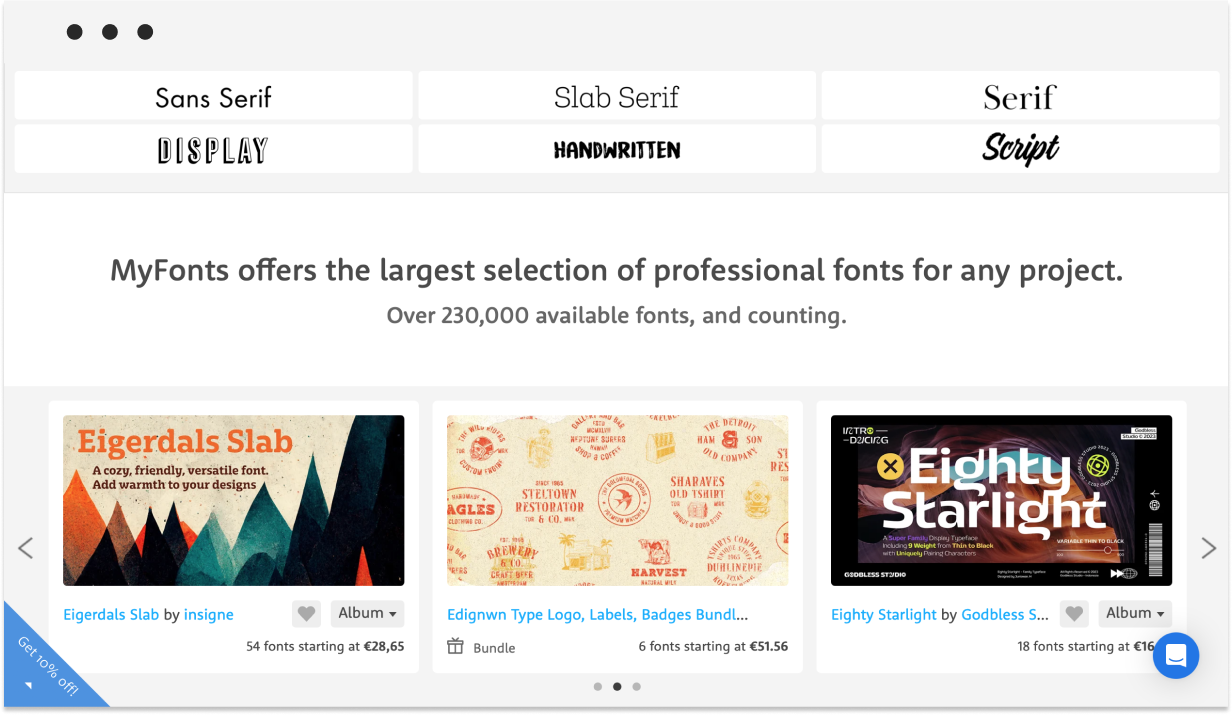
MyFonts is owned by Monotype and is one of the largest font marketplaces in the world. It gives you access to a huge audience of professional designers and businesses. The commission structure varies but is typically around 50% for the foundry. The platform handles licensing complexity and has strong SEO for font related searches.
Etsy
Etsy has become a popular place to sell fonts, especially script and decorative fonts targeting small business owners, wedding planners, and crafters. The fees are lower than dedicated font marketplaces at around 12% to 15%, but the buyer expectations are different. Etsy buyers typically want simpler licensing and lower prices compared to professional design marketplace buyers.
Fontspring
Fontspring positions itself as a designer friendly marketplace with transparent pricing and no subscriptions. They take a commission of around 30% to 50% depending on your agreement. The audience is primarily professional designers and agencies.
Marketing Your Fonts Effectively
Even the best font will not sell if nobody knows about it. Here are the marketing channels and strategies that work best for font designers.
Instagram and Behance
Visual platforms are perfect for showcasing fonts. Create beautiful mockups showing your font in real world applications like logos, packaging, signage, social media graphics, and editorial layouts. Post consistently and use relevant hashtags like #typography, #typedesign, #fontdesign, and #handlettering. Behance in particular attracts professional designers who are active font buyers.
Font Marketing Strategies That Work:
• Create font specimen posters — share on Dribbble, Behance, and Instagram for designer exposure
• Offer free weights or demo versions — let designers try before buying the full family
• Bundle fonts together — sell 3 to 5 complementary fonts as a discounted package
• Partner with design influencers — send free licenses to YouTubers who review fonts
• Run seasonal promotions — Black Friday and New Year are peak font buying seasons
Font Showcases and Blogs
Submit your fonts to typography blogs, design roundup sites, and font showcase platforms. Getting featured on a popular design blog can drive hundreds or thousands of sales. Sites like Typewolf, Fonts In Use, and design newsletters are excellent targets for outreach.
Free Fonts as Marketing
Releasing a free font is one of the most effective marketing strategies in the font business. A well designed free font that gets widely used builds your reputation and drives traffic to your store. Many successful type designers release one free font for every three to five paid fonts. The free font gets shared widely, establishes credibility, and introduces new customers to your paid catalog.
Email Marketing
Build an email list of designers, creatives, and font enthusiasts. Offer a free font or font preview as a signup incentive. Send new font announcements, behind the scenes looks at your design process, and exclusive discounts to your subscribers. With Storelib's built in email tools, you can manage your list and send campaigns without a separate email service.
Pinterest is surprisingly effective for font marketing. Create pins showing your fonts in beautiful mockup settings and link them to your product pages. Pins have an extremely long lifespan and can drive consistent traffic for months or years. Use keywords like "wedding font," "logo font," "modern font," and similar search terms in your pin descriptions.
Creating Compelling Font Product Pages
Your font product page is where browsers become buyers. Here is what a high converting font product page needs.

Beautiful preview images. Show your font in context. Create mockups of the font on business cards, websites, packaging, posters, and social media graphics. Buyers want to see how the font looks in real applications, not just a character chart.
Complete character set display. Show every character your font includes: uppercase, lowercase, numbers, punctuation, special characters, ligatures, and alternates. This helps buyers assess whether the font meets their needs.
Clear licensing information. Explain exactly what each license covers in plain language. Avoid legal jargon. Buyers should understand immediately what they can and cannot do with the font.
Font specimen at multiple sizes. Show the font at headline size, subheading size, and body text size. This helps buyers understand how the font performs across different applications.
File format details. List exactly which file formats are included (OTF, TTF, WOFF, WOFF2) so buyers know they are getting the formats they need.
Protecting Your Fonts From Piracy
Font piracy is a real concern, but it should not prevent you from selling. Here are practical steps to protect your work.
Use a platform that controls file access. When you sell through Storelib, files are only accessible to paying customers through secure download links. This prevents unauthorized sharing of your font files.
Include license documentation in your font package. A clear license file that explains the terms of use helps legitimate buyers understand their rights and serves as a reminder that the font is not free to distribute.
Some type designers embed identifying information in their font files that can trace a pirated copy back to the original purchaser. This is not foolproof but acts as a deterrent.
Ultimately, the best protection against piracy is to make buying easier than pirating. When your fonts are fairly priced, easy to purchase, and delivered instantly, most people will choose to buy legitimately. The small percentage who pirate were unlikely to pay in any scenario.
Final Thoughts
Selling fonts online is a deeply rewarding business for anyone with type design skills. The combination of creative fulfillment, passive income potential, and evergreen demand makes it one of the best digital product businesses you can build. The fonts you create today can generate revenue for years to come with minimal ongoing effort.
Start with one font that you are proud of. Focus on quality over quantity. Get it in front of the right audience through strategic marketing. And choose a selling platform that lets you keep as much of your revenue as possible.
If you are ready to start selling your fonts, create your free Storelib store and list your first font today. With instant digital delivery, professional product pages, marketplace exposure, and the lowest fees in the industry, it is the ideal platform for independent type designers who want to turn their craft into income.

More in Getting Started
Start your online business!
Turn your digital creations into income. Launch your store in minutes, no credit card required.