
How to Sell Digital Products Online in 2026: The Complete Practical Guide
6 months ago · 15 min read
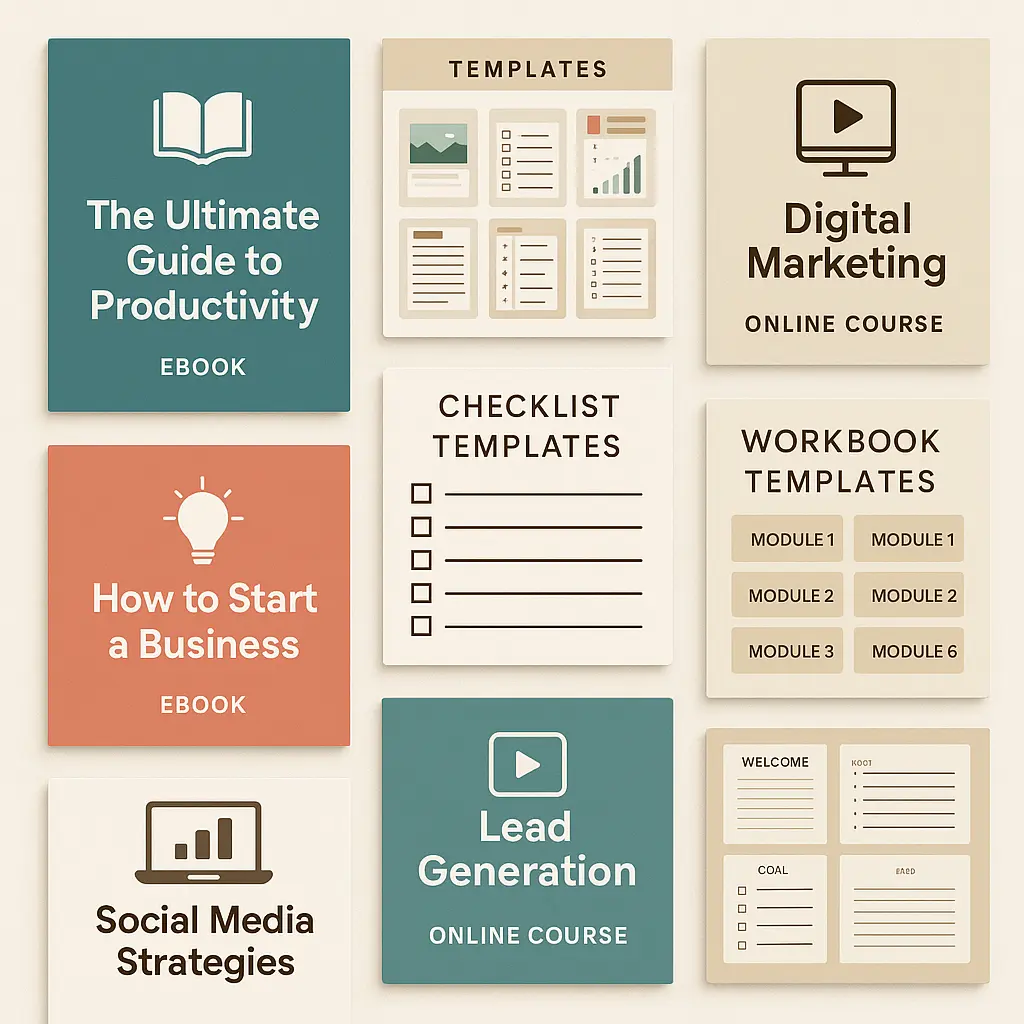
Why 2026 is the Best Time to Start Selling Digital Products
Here's the thing about selling digital products: the barriers to entry have never been lower, but the potential returns have never been higher. We're talking about a global market worth over $2.5 trillion annually, and it's still growing at a pace that physical product businesses can only dream about.
In 2024, the creator economy exploded. In 2025, it matured. Now in 2026, it's where the real money is. And unlike the hype cycle, this isn't temporary. The fundamentals have shifted.
Why? Because creating digital products has become genuinely faster and cheaper than ever before. AI tools have cut creation time by 60 to 80 percent. Payment infrastructure works across 135 countries. Distribution channels are global and free. A solo founder can now ship what used to require a team of five.
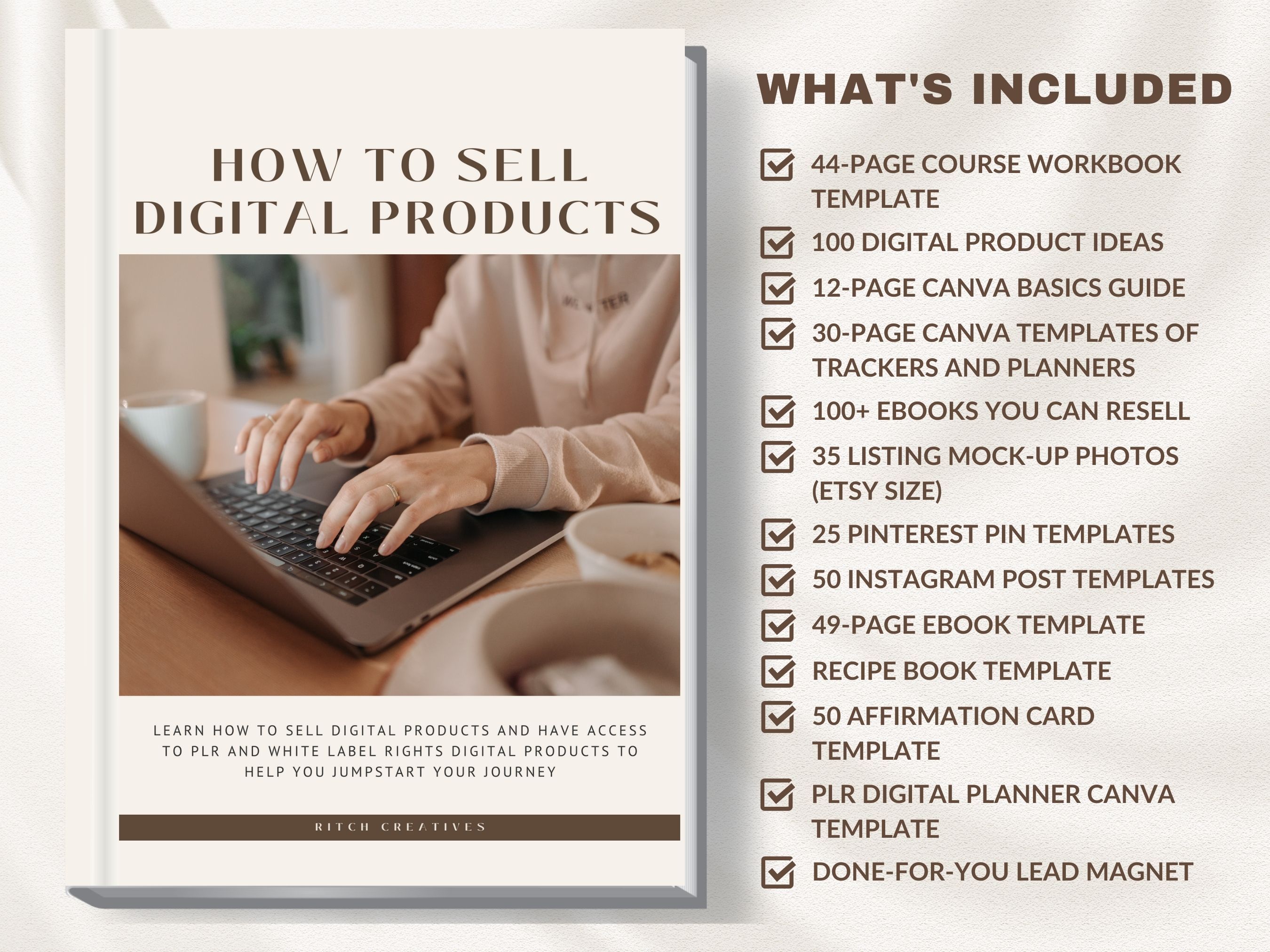
The math is simple: digital products have profit margins of 80 to 95 percent. Physical products? 30 to 50 percent if you're doing really well. And the best part? You create once, sell infinitely. No inventory. No shipping. No customer support nightmares about damaged goods.
If you've been thinking about monetizing your knowledge, your skills, or your creative work, the time to start is now. This guide will show you exactly how.
What Are Digital Products, Really?
Digital products are anything of value that exists only in digital form. No physical shipping. No inventory to manage. No fulfillment headaches.
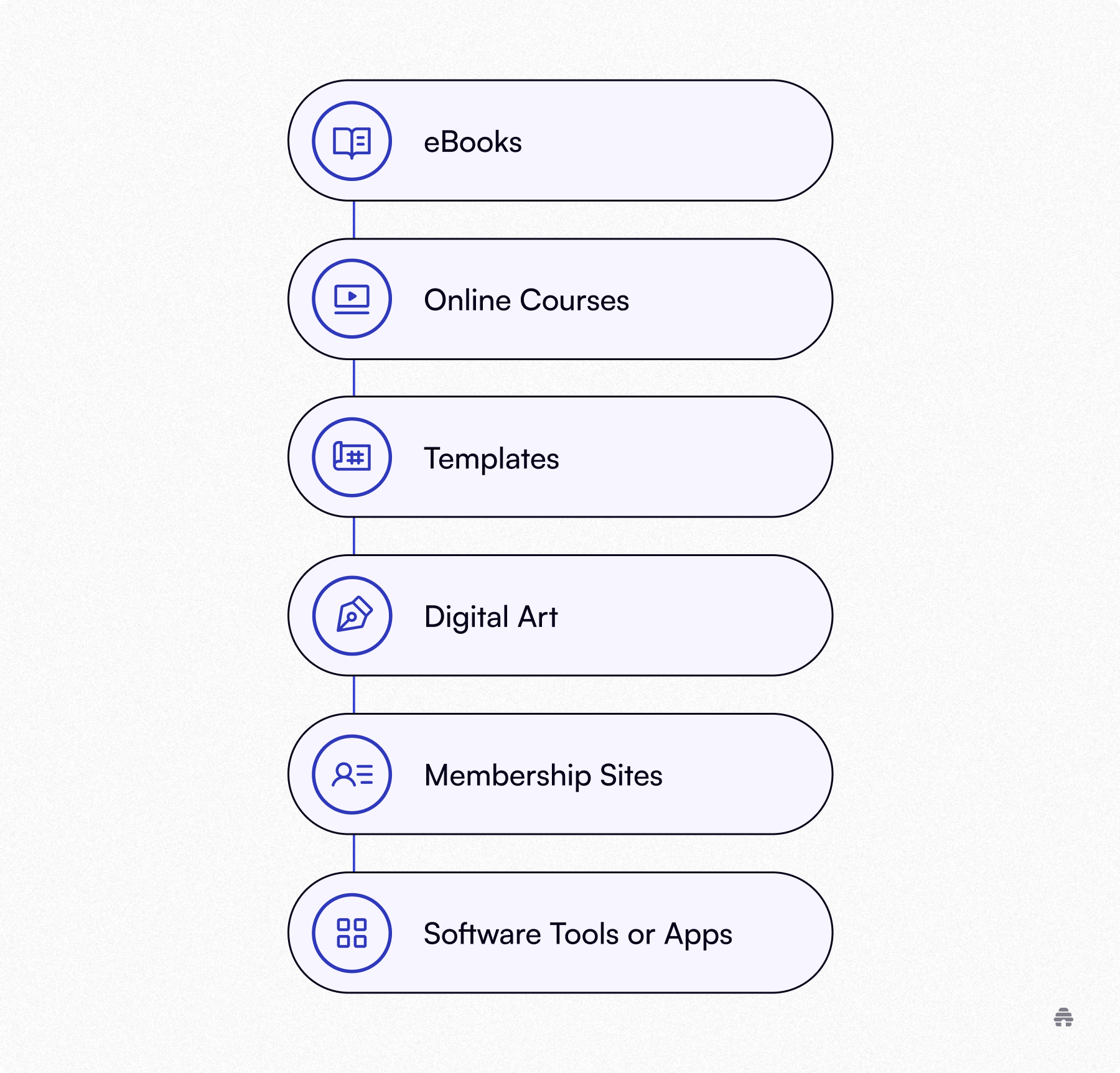
The broadest definition is simple: it's content or software that someone downloads, accesses, or uses online. That could be a PDF template, a software tool, an online course, a music track, or source code.
What makes digital products special is the economics. Once you've created it, the marginal cost to sell to one more customer is essentially zero. You don't manufacture more. You don't buy more inventory. You just sell it again.
| Product Type | Example | Startup Cost | Profit Margin | Difficulty |
|---|---|---|---|---|
| Templates and Tools | Figma templates, Excel spreadsheets | Low (50 to 200) | 90% | Medium |
| Ebooks and Guides | How to guides, industry reports | Very Low (0 to 100) | 95% | Low |
| Online Courses | Video training, lessons | Medium (200 to 1000) | 85% | High |
| Music and Sound | Beat packs, stock music | Medium (100 to 500) | 80% | Medium |
| Code and Software | WordPress plugins, apps | High (1000+) | 92% | Very High |
| Digital Art and Design | Icons, graphics, illustrations | Low (0 to 100) | 93% |
The table above shows the main types, but the categories aren't rigid. You can blend them. A course with templates included. An ebook bundle with checklists. Memberships with exclusive access to live sessions.
The 7 Most Profitable Types of Digital Products in 2026
1. Templates and Frameworks
Templates solve real problems. A Notion template that organizes a creator's entire business? People pay 20 to 50 dollars for that. A Figma design system? 100+ dollars. The creation time is typically 10 to 30 hours, and the demand is consistently high.
2. Online Courses and Training
Courses still dominate because they combine education with transformation. A good course on copywriting, web design, or business development can sell for 97 to 297 dollars. Some sell for thousands. The barrier is effort, not cost. You need video, editing, organization, and marketing. But the payoff is substantial.
3. Ebooks and Digital Books
Ebooks are underrated in 2026. People still read and prefer them for deep learning. They're quick to create, easy to update, and naturally generate passive income. Most sell in the 5 to 27 dollar range, but volume can make them incredibly profitable.
4. Software and Tools
From Chrome extensions to SaaS products to mobile apps, software commands premium pricing. A well built tool can sell for 100 dollars a month in subscription revenue or 500 to 5000 dollars as a one time purchase. The upfront work is high, but the long term returns justify it.
5. Membership Communities
Monthly recurring revenue is the dream. A private community where members get exclusive content, networking, and support? People pay 10 to 100 dollars per month. With just 50 active members at 50 dollars monthly, you're looking at 2500 dollars recurring income. That scales.
6. Stock Assets and Creative Content
Stock photography, vectors, music tracks, video clips, presets, brushes. These have low individual prices (1 to 10 dollars) but extremely high volume potential. Passive income at scale. Build a library of 500 stock photos and you could see hundreds of downloads per month.
7. Coaching and Consulting Productized Services
Instead of hourly rates, package your expertise into fixed outcomes. "I'll audit your website for 197 dollars." "I'll write 10 sales pages for 3000 dollars." These are partly service, partly product. They scale your time without consuming all of it.

Step by Step: How to Create Your First Digital Product
Don't overthink this. Here's the actual process in four stages.
Step 1: Pick a Topic You Know Well (or Can Learn Fast)
The best first product solves a problem you've already solved. If you've taught yourself coding, write a guide. If you've built a successful Etsy shop, create a course about it. If you've designed 100 logos, make a template pack.
Your expertise doesn't need to be "world class." It just needs to be better than where your customer is right now. Someone one step behind you is your ideal customer.
Step 2: Validate Before You Build (Takes 1 to 2 Weeks)
Don't spend 40 hours building something nobody wants. Ask people first. Create a simple landing page. Survey your audience. Ask in communities. If 20 people say they'd buy it, you've got validation.
This step saves months of wasted effort. Most products fail not because they're badly made, but because they solve problems nobody cares about.
Step 3: Create a Minimum Viable Product (Not a Masterpiece)
Your first version doesn't need to be perfect. It needs to deliver value. A course doesn't need Hollywood production quality. An ebook doesn't need a professional designer. A template doesn't need 50 variations.
Ship something now. Improve it based on feedback. That's the path every successful creator follows. Perfectionism is the enemy of shipping.
Step 4: Set Up Sales and Distribution
Where will you sell it? How will people pay? How will they get it? These logistics need to work before you go public. Test everything with a small group first. Fix the bugs. Then launch.
Where to Sell: Platform Comparison
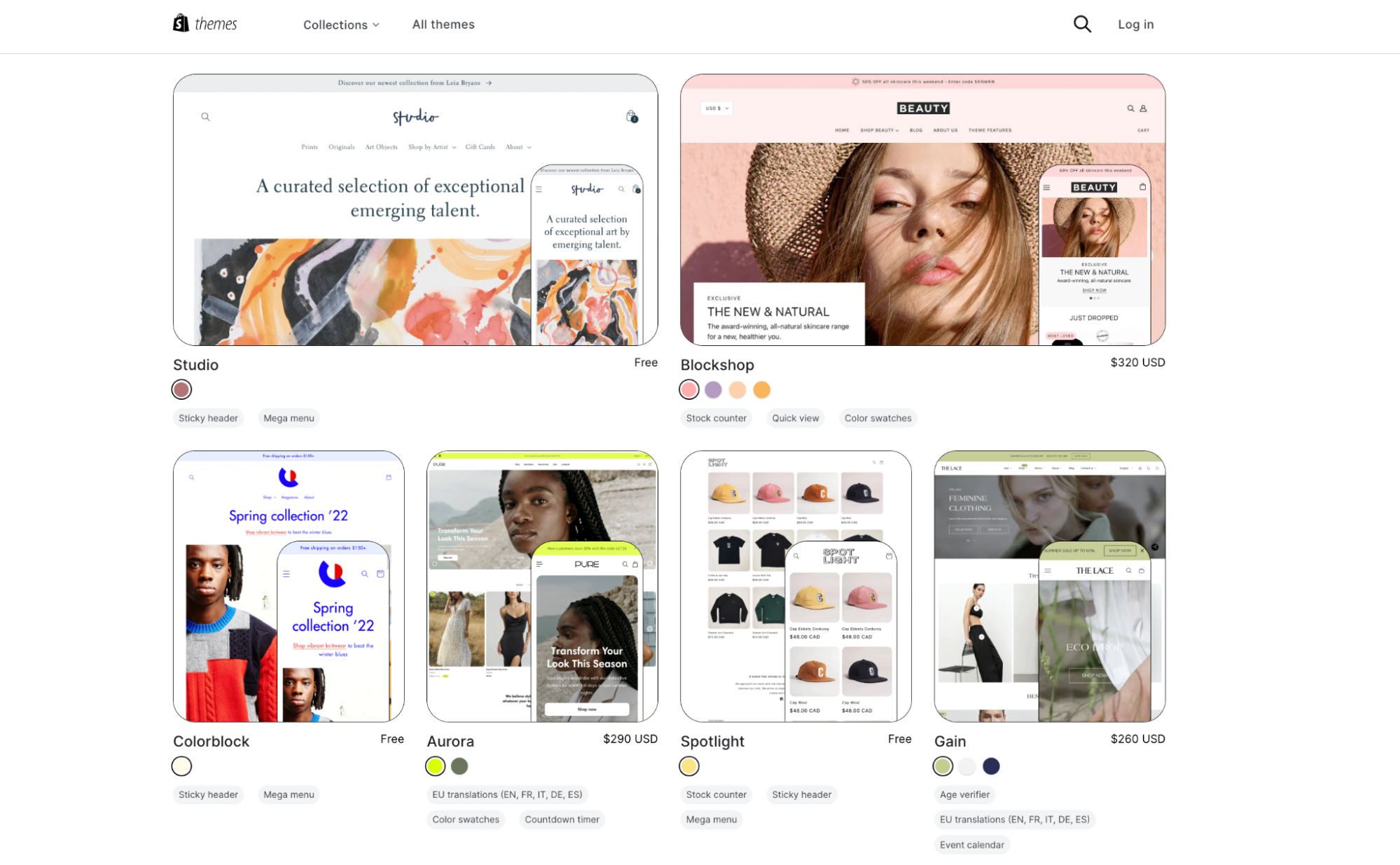
The platform you choose affects your margins, reach, and control. Here are the main options.
Your Own Store (Storelib)
Best For: Creators who want complete control and a scalable business Storelib is an all in one platform built specifically for digital product creators. You get a drag and drop store builder, integrated payments in 135+ countries, built in AI tools for faster creation, custom domain support, and a built in marketplace for organic product discovery. Why Storelib? It eliminates the platform tax. You keep more revenue. You own the customer relationship. You get features like courses, memberships, bookings, and digital downloads all in one place. No juggling multiple tools. Fees: Competitive rates with no listing fees Control: Complete
Gumroad
Best For: Indie creators and artists who want simplicity Dead simple. Upload your file, set a price, done. No learning curve. Great for creators with an existing audience on social media. Fees: 10% commission plus payment processing Control: Limited branding options
Teachable or Thinkific
Best For: Course creators specifically Purpose built for online courses. Great tools for video hosting, student management, and engagement. More features than general platforms, but less flexibility. Fees: 5% commission, plus monthly plans starting at 119 dollars Control: High for courses, limited for other products
Etsy Digital Products
Best For: Templates, graphics, designs, wallpapers, and creative assets Etsy brings massive built in traffic. You don't need to market as hard. Millions of buyers already browsing. Perfect for passive income, weak for building a direct audience. Fees: Listing fee 0.20 dollars plus 6.5% + payment processing Control: Minimal, but traffic is huge
Most successful creators eventually move to their own store because the platform tools become limiting and the fees add up. Starting with Storelib means you don't need to migrate later.
Pricing Strategies That Actually Work
Price too low and people think it's worthless. Price too high and nobody buys. The sweet spot depends on what you're selling.
Price Based on Value, Not Time
Forget hourly rates. Forget "cost plus 50%." Those are manufacturing concepts. Digital products have zero marginal cost, so normal pricing logic doesn't apply.
A template worth 500 hours to create is still a template. If it saves someone 20 hours and they earn 75 dollars per hour, it's worth up to 1500 dollars to them. Price closer to the value created, not the time spent.
The Price Anchoring Method
Offer three price tiers. A basic version, a professional version, and a premium version. Most people buy the middle tier. That's where you make your money. The cheap tier filters for seriousness. The expensive tier provides revenue from power users.
Launch Pricing and Early Bird Discounts
Launch at a discount. Offer 40% off the first 100 buyers. This generates momentum, early testimonials, and social proof. After that, raise the price. Early adopters feel like they got a deal. New buyers pay full price. Everyone is happy.
Psychological Price Points
27 dollars converts better than 25 dollars. 197 dollars converts better than 200 dollars. There's psychology to it. People evaluate differently at round numbers versus specific numbers.
For low price items (under 50 dollars), use specific numbers ending in 7. For higher price items (100+ dollars), use numbers ending in 7 or 9.
Bundle and Increase Average Order Value
Sell individual products. Then create bundles. Buyer purchased the course? Offer them templates related to it at 30% off. Bought the templates? Offer a complementary guide.
A 27 dollar ebook isn't great revenue. But a bundle (ebook plus templates plus checklist) at 97 dollars? Much better. The customer gets more value. You increase revenue without increasing customer count.
Marketing Your Digital Products (Organic and Paid)
A great product with no marketing sells to zero people. A decent product with great marketing outsells it 10 to 1.
The Organic Path: Build Audience First
The easiest way to sell is to people who already like you. Write about your niche on Twitter. Share value on LinkedIn. Build an email list. Make YouTube videos. This takes time (months, not weeks), but it's free and it builds real relationships.
By the time you launch your product, you have an audience waiting. Your first week of sales is strong. Word of mouth kicks in. Momentum builds.
Content Marketing That Sells
Write blog posts, make videos, record podcasts about your domain. Don't just sell. Teach. Share knowledge freely. Then, when you have a product, your audience naturally becomes your customers.
Create a blog post on "how to write product descriptions." Build an audience around that. Then sell a template pack for product descriptions. The audience is ready.
Email Marketing (Your Best Conversion Channel)
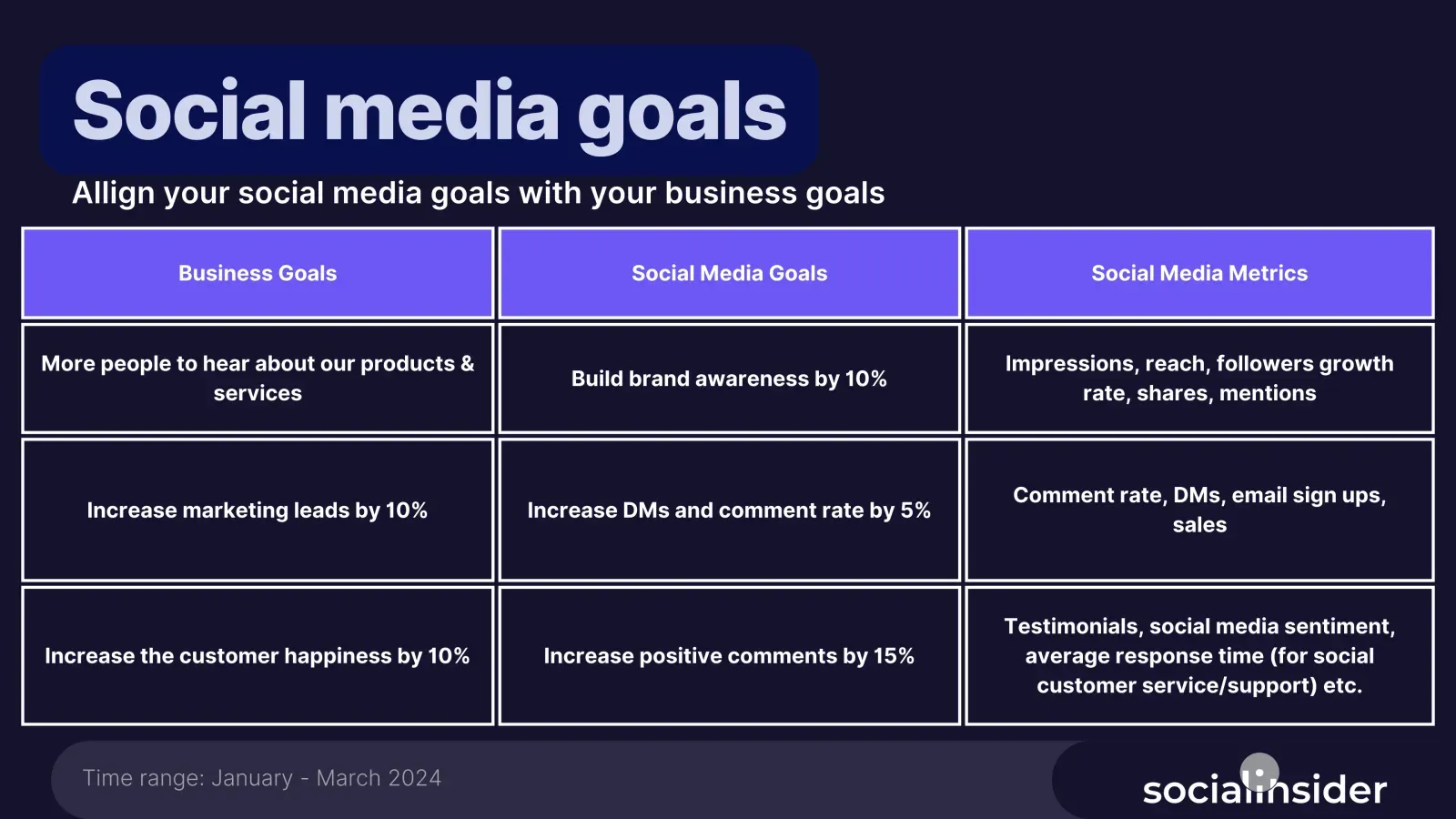
Email outperforms social media by a massive margin. If you have an email list of 5000 people and 2% of them buy a 97 dollar product, that's 9700 dollars in revenue in one day.
Start collecting emails immediately. Use a landing page. Offer something free in exchange for email addresses. Build a list while you're creating your product.
Paid Advertising (When Organic Isn't Fast Enough)
Once you know your conversion rate and customer lifetime value, paid ads work. If your product sells for 197 dollars with a 3% conversion rate from ads, and ads cost 2000 dollars, you get about 30 customers and 5910 dollars in revenue.
This only works if you have proof the product sells. Don't spend ad money on untested offers. Test first with organic. Once it works, scale with ads.
Partnerships and Affiliates
Ask people in your network to share your product. Offer them 20 to 30% commission. Their audience might be perfect for your offer. Win win. They make money. You make money. The customer gets a product they love.
SEO and Long Term Traffic
A blog post that ranks in Google for your keyword can drive traffic for years. It's slow to build but it's free and it's permanent. A single top ranking page might send you 50 to 100 relevant visitors per month. Some will buy.
Write for search engines and your audience simultaneously. Use keywords naturally. Answer the questions people actually ask. This compounds.
Common Mistakes to Avoid
Building Before Validating
The number one mistake. Creators spend 60 hours building something and then realize nobody wants it. Always validate first. A survey, a landing page, a few interviews. Proof that people care. Then build.
Underestimating Marketing Effort
Products don't sell themselves. You need a distribution strategy. If you have zero audience, your first product will sell slowly. Plan for that. Budget time and energy for marketing before you launch.
Perfectionism in Product Creation
Waiting for the perfect course video, the perfect ebook design, the perfect template. This kills momentum. Ship a good product now. Improve it based on feedback. Perfection takes forever.
Ignoring Customer Feedback
Your product won't be perfect. People will ask for improvements. Listen. If five customers ask for the same feature, add it. This builds loyalty and increases repeat sales.
Inconsistent Pricing or Constantly Discounting
Never drop price too aggressively after launch. You train people to wait for discounts. They hold off buying expecting a sale. Stick to your pricing. Occasional promotions are fine. Constant discounting kills margins and signals weakness.
Not Building an Email List
This is where your power is. Own the relationship with your customers. Email gets better response rates than any social platform. Start building this today, even before you have a product.
Trying to Sell to Everyone
A product for "everyone" appeals to nobody. Be specific. "A design course for Shopify store owners." Not "a design course for anyone." Specificity converts better. It's not less market, it's more sales.
The Reality of Digital Product Income
Here's what nobody tells you: your first digital product probably won't make you rich. It won't pay your mortgage in month one. But it's the foundation for everything that comes next.
Your first product might make you 500 dollars in month one. Not life changing. But you've learned the entire process. You've proved it's possible. You know what works and what doesn't.
Your second product launches to an audience that already knows you. It makes 3000 dollars. Your third makes 8000 dollars. By your fifth product, you have enough of an audience and enough expertise that each launch does 10000 to 50000 dollars in revenue.
This is how creators actually build sustainable income. Not one product. A portfolio of complementary products, built over time, each feeding the next.
The barrier isn't talent or capital. It's starting. Most people don't. They think about it. They plan it. They never ship. That's why the people who do have such a huge advantage.
You don't need permission. You don't need an MBA. You don't need funding. You need an idea, the ability to execute, and the willingness to talk about what you've made.
If that sounds like you, the 2.5 trillion dollar digital product market is waiting.
Where to Start Right Now
This week: Pick one digital product idea. Something you could teach someone in your sleep. One idea. Commit.
Next week: Validate it. Ask 20 people in your target market if they'd buy this. Track their responses. This takes 2 to 3 hours.
Week three: Start building a minimal version. Not the whole thing. The core 60%. The part that delivers 80% of the value.
Week four: Set up your sales mechanism. Whether that's Storelib or another platform. Have everything ready to go live.
Week five: Launch to a small group. Get feedback. Improve based on what you hear.
Week six: Soft launch to your existing audience.
Week seven: Real launch with marketing push.
In seven weeks, you can have your first digital product generating income. Not a guarantee it will make thousands. But it will be shipped. It will be real. And you'll know the path forward.
2026 is the year where digital product creators finally get taken seriously. It's the year where the infrastructure matured enough that beginners can actually compete with professionals. It's the year the leverage became obvious.
The question is whether you'll be one of the people who takes advantage of it. Or one of the people who reads guides and never ships.
Start this week. Seriously.

More in Strategy
Start your online business!
Turn your digital creations into income. Launch your store in minutes, no credit card required.