.svg)
How to Build an Email List to Sell Digital Products in 2026
Today · 15 min read
If you're selling digital products, or planning to, your email list is the single most valuable asset you can build. Not your Instagram followers. Not your TikTok views. Not your SEO rankings. Your email list. Because it's the only audience you actually own, and it's the channel with the highest conversion rate by far.
The numbers back this up. Email marketing generates an average of $36 for every $1 spent, which makes it the highest-ROI marketing channel that exists. And for digital product creators specifically, email consistently outperforms every other channel when it comes to actually driving sales. A single well-written email to a list of 1,000 engaged subscribers can generate more revenue than a social media post seen by 50,000 people.
This guide breaks down exactly how to build an email list from scratch, what tools to use, how to get your first subscribers, and how to turn those subscribers into paying customers. No fluff, no theory. Just what actually works in 2026.
Why Email Beats Every Other Channel for Selling Digital Products
Before we get into the how, let's talk about why email matters so much for digital product sellers specifically. There are several reasons this channel is uniquely powerful:
- You own your list. Instagram can change its algorithm tomorrow. A marketplace can bury your listings. TikTok can ban your account. But your email list? That's yours. Nobody can take it away or throttle your reach.
- Direct access to buyers. When you send an email, it goes straight to someone's inbox. No algorithm deciding whether they see it. No competing with 500 other posts in a feed.
- Highest conversion rates. Email converts at 3-5% on average for digital products. Social media? Usually under 1%. That's a massive difference when you do the math.
- Repeat sales machine. Once someone buys from you and stays on your list, you can sell to them again and again. Your best customers will buy multiple products over time.
- Segmentation power. You can tag subscribers based on what they're interested in and send targeted offers. Someone who downloaded your free budget template is way more likely to buy your premium finance bundle.
Step 1: Choose Your Email Marketing Platform
You need an email service provider (ESP) to collect subscribers, send emails, and manage your list. The good news is there are great free options to start with. Here's what we recommend:
| Platform | Free Tier | Best For | Key Feature |
|---|---|---|---|
| Kit (formerly ConvertKit) | Up to 10,000 subscribers | Digital product creators | Visual automation builder, built for creators |
| Mailchimp | Up to 500 subscribers | Beginners | Easy drag-and-drop editor |
| MailerLite | Up to 1,000 subscribers | Small businesses | Landing pages included |
| Brevo (formerly Sendinblue) | Unlimited contacts, 300 emails/day | Budget-conscious creators | Generous free plan |
| Beehiiv | Up to 2,500 subscribers | Newsletter-first creators | Built-in monetization tools |
For digital product creators specifically, Kit (formerly ConvertKit) is the gold standard. It was literally built for creators who sell digital products. The visual automation builder makes it easy to set up sequences like: someone downloads free template, gets 3 value emails, gets pitch for premium bundle. That kind of automation is what turns a list into a revenue machine.
That said, if you're just starting out and budget is tight, MailerLite or Brevo are solid free options that'll handle everything you need until you're ready to invest more.
Step 2: Create a Lead Magnet That People Actually Want
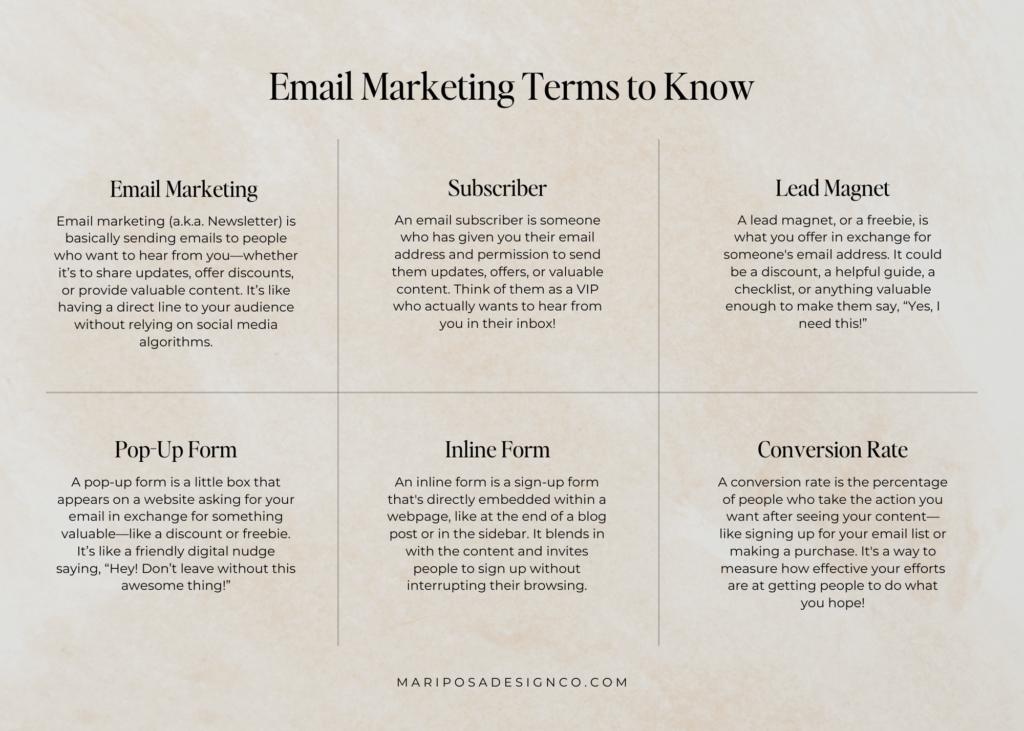
Nobody gives away their email address for nothing. You need to offer something valuable in exchange. This is called a lead magnet, and it's the foundation of your entire email list strategy.
The best lead magnets for digital product sellers share these characteristics:
- Directly related to your paid product. If you sell a premium Notion template bundle, your lead magnet should be a free Notion template. This way, everyone who downloads your freebie is pre-qualified as someone interested in what you sell.
- Immediately useful. The person should be able to use it right away and get value from it within minutes. A 50-page ebook is not a good lead magnet. A one-page checklist they can use today is.
- Solves a specific problem. Vague lead magnets ("my best tips") don't work. Specific ones do ("The 5-Minute Morning Routine Planner That Actually Sticks").
- Shows the quality of your paid work. Your freebie is a preview of what paying customers will get. Make it good enough that people think, "if this is what they give away for free, the paid stuff must be amazing."
Here are lead magnet ideas that work well for different types of digital products:
- If you sell templates: give away one free template from your collection
- If you sell courses: offer a free mini-lesson or the first module
- If you sell printables: create a free sample pack with 3-5 printables
- If you sell presets or filters: give away 2-3 free presets
- If you sell ebooks: offer the first chapter or a companion checklist
- If you sell fonts or graphics: give away a mini pack of free assets
Step 3: Build Your Opt-in Pages and Forms
You've got your ESP and your lead magnet. Now you need places where people can actually sign up. There are several types of opt-in points, and ideally you should use all of them:
- Dedicated landing page: a standalone page focused entirely on your lead magnet. No navigation, no distractions, just the offer and a sign-up form. This is what you'll link to from social media, your bio, and ads.
- Website pop-up: yes, pop-ups are annoying. They also work incredibly well. A well-timed pop-up (triggered after 30 seconds or on exit intent) can capture 3-5% of visitors.
- Inline forms: embed sign-up forms within your blog posts, especially at the end of relevant content. Someone who just read your article about meal planning is primed to download your free meal planner template.
- Checkout page opt-in: add a checkbox during checkout: "Sign up for our newsletter to get exclusive freebies and early access to new products." Customers who just bought from you are highly likely to opt in.
- Social media bio link: your Instagram, TikTok, and Twitter bios should link to your lead magnet landing page, not just your store.
If you're using Storelib, you can add email capture forms directly to your store pages and product pages. This is huge because you're capturing emails from people who are already browsing your products. They're warm leads by default.
Step 4: Drive Traffic to Your Lead Magnet
Your lead magnet is ready, your landing page is live. Now you need eyeballs. Here are the most effective free and paid traffic sources for building an email list:
Pinterest: create pins that promote your free lead magnet. Pinterest users are already in discovery mode and are very willing to click through and download freebies. This is especially powerful for printables, templates, and visual digital products.
Blog content + SEO: write blog posts targeting keywords your ideal customers are searching for. Include your lead magnet opt-in within each post. This is a slow-burn strategy but incredibly powerful over time. A single well-ranking blog post can generate subscribers on autopilot for years.
Social media content: create value-packed content on Instagram, TikTok, or Twitter that naturally leads to your freebie. Example: post a TikTok showing 3 quick budgeting tips, then say "I made a free budget planner that goes with these tips, link in bio."
Collaborations and cross-promotions: partner with other creators in complementary niches. You promote their freebie to your audience, they promote yours. Both lists grow. This works especially well when you're starting out and don't have a big audience yet.
Paid ads (when ready): once you've validated your funnel and know your numbers (cost per subscriber, email conversion rate, average revenue per subscriber), Facebook and Instagram ads can scale your list growth significantly. Start small. Even $5/day can bring in 10-20 subscribers.
Step 5: Set Up Your Welcome Sequence
When someone subscribes, don't just deliver the freebie and disappear. The first few emails someone receives from you set the tone for the entire relationship. This is your welcome sequence, and it's one of the highest-impact things you can build.
Here's a proven 5-email welcome sequence structure for digital product sellers:
- Email 1 (immediately): Deliver the lead magnet. Keep it short and friendly. "Here's your [freebie name]! I hope you love it." Include a quick one-line intro about who you are.
- Email 2 (day 2): Share your story. How did you get into creating digital products? What's your background? This builds connection and trust. People buy from people they relate to.
- Email 3 (day 4): Provide additional value related to your lead magnet. If they downloaded a budget planner, share your top 3 budgeting tips. This positions you as an expert and shows you're not just here to sell.
- Email 4 (day 6): Soft pitch. Introduce your paid product naturally. "If you liked the free template, you'll love the full bundle. It includes 25 templates that cover [specific benefits]." Include a link but keep it low-pressure.
- Email 5 (day 8): Direct pitch with social proof. Share a testimonial or sales number. Create gentle urgency if possible. "Over 500 creators are already using this bundle to [benefit]. Here's the link if you're ready."
This sequence works because it follows a natural progression: deliver value, build trust, establish expertise, introduce offer, close the sale. Don't skip the value steps and jump straight to selling. That's the fastest way to get unsubscribes.
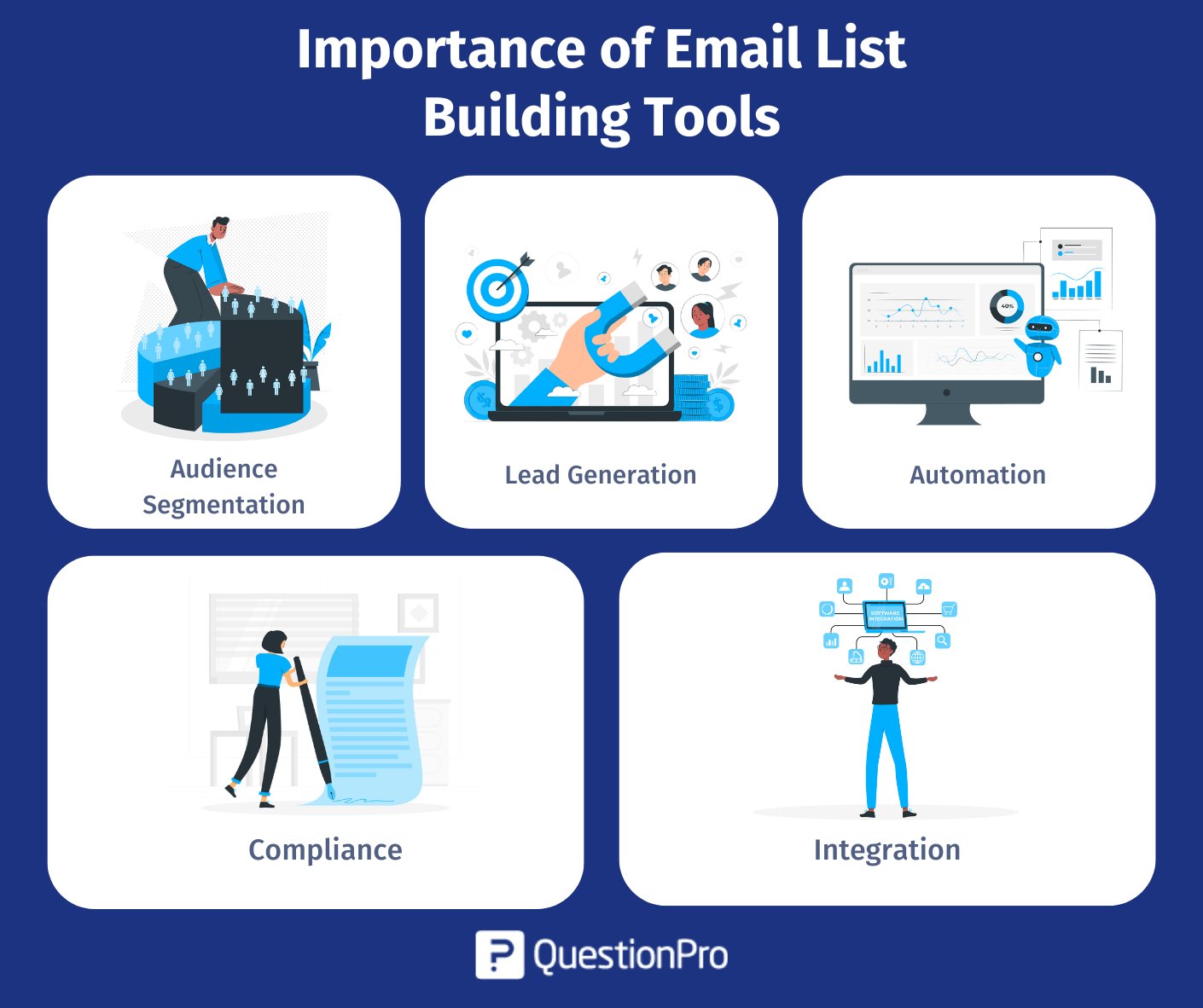
Step 6: Segment Your List for Better Conversions
Not all subscribers are the same. Someone who downloaded your free budget template has different needs than someone who grabbed your free Canva templates. Segmentation lets you send the right offers to the right people, which dramatically improves your conversion rates.
Here's how to segment effectively:
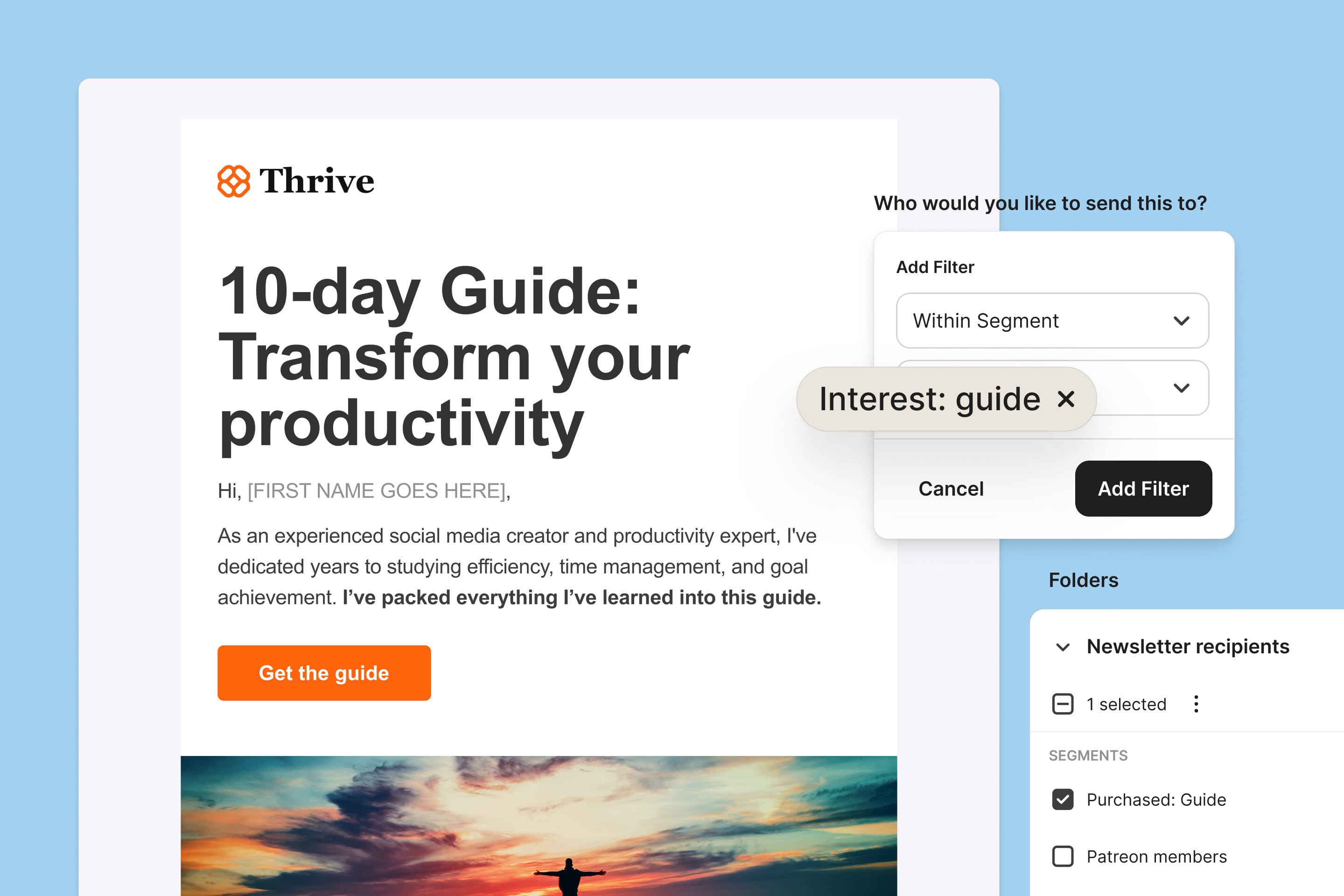
- By lead magnet: tag subscribers based on which freebie they downloaded. This tells you exactly what they're interested in.
- By purchase history: separate buyers from non-buyers. Send different content to each group. Buyers get upsells and new product announcements. Non-buyers get more nurture content and entry-level offers.
- By engagement level: track who opens your emails and who doesn't. Re-engage inactive subscribers with a special offer, and focus your best content on your most engaged readers.
- By source: where did they come from? Pinterest, Instagram, a blog post? This helps you understand which traffic sources bring the highest-quality subscribers.
Step 7: Write Emails That Actually Get Opened and Drive Sales
Your list is growing, your welcome sequence is running. Now you need to send regular emails that keep people engaged and drive sales over time. Here's what works:
- Subject lines are everything. 47% of people open emails based on the subject line alone. Keep them short (under 50 characters), create curiosity, and be specific. "I almost quit last month" beats "Monthly newsletter update."
- Write like a human. No corporate speak. No "Dear valued subscriber." Write like you're emailing a friend. Use contractions. Be casual. Share real experiences.
- One email, one goal. Every email should have one clear purpose. Either you're providing value, telling a story, or making an offer. Don't try to do all three at once.
- The 80/20 rule: 80% value, 20% selling. For every 4-5 emails that teach, inspire, or entertain, one can be a direct pitch. This ratio keeps your list healthy and your unsubscribe rate low.
- Include a call to action. Every email should ask the reader to do something. Click a link, reply to the email, check out a product. Don't just deliver information and disappear.
A weekly email cadence works well for most digital product creators. Consistent enough to stay top of mind, but not so frequent that you burn people out. Some creators do great with 2-3 emails per week, but start with one and increase if your open rates stay strong.
Step 8: Launch Products to Your List
This is where your email list really pays off. When you launch a new digital product, your list should be your #1 sales channel. Here's a simple launch email sequence that works:
- Teaser email (1 week before): hint that something new is coming. Build anticipation without revealing everything. "I've been working on something new for the past month... I'll share more next week."
- Announcement email (launch day): reveal the product. Explain what it is, who it's for, and what problem it solves. Include launch pricing if applicable.
- Value email (day 2): share a behind-the-scenes look at how you created it, or dive deeper into one specific benefit. This addresses objections and builds desire.
- Social proof email (day 3-4): share early customer testimonials, screenshots, or results. "Here's what Sarah said after using the template for just one week..."
- Last chance email (final day): if you have a launch price or bonus, this is the urgency email. "Launch pricing ends tonight at midnight." This email typically generates 30-40% of total launch revenue.
A list of just 500 engaged subscribers can generate $1,000+ in a single product launch if you've built trust and your product genuinely solves a problem they have. That's the power of email. No algorithm deciding who sees your message. No ad spend required. Just direct access to people who already told you they're interested.
Common Email List Building Mistakes
These are the mistakes that kill most creators' email strategies before they ever get traction:
- Waiting to start. "I'll build a list when I have more products." No. Start now. Even if you have one product, or no products yet. Every day you wait is subscribers you'll never get back.
- Generic lead magnets. "Sign up for my newsletter" is not a lead magnet. Give people something specific and valuable in exchange for their email.
- Selling too soon. Blasting your list with sales emails from day one destroys trust. Build the relationship first.
- Selling too rarely. The opposite extreme. Some creators are so afraid of selling that they never pitch anything. Your subscribers signed up because they're interested in what you create. Selling is serving.
- Ignoring your list. Emailing once every 3 months means nobody remembers who you are. Be consistent, even if it's just once a week.
- Not cleaning your list. Remove subscribers who haven't opened an email in 90 days. A smaller, engaged list performs better than a large, dead one. Plus, most ESPs charge based on subscriber count.
- No segmentation. Sending the same email to everyone means you're always irrelevant to someone. Tag and segment from day one.
Email List Growth Benchmarks
So you know what you're aiming for, here are realistic benchmarks for digital product creators:
| Metric | Good | Great | Excellent |
|---|---|---|---|
| Monthly list growth rate | 5-10% | 10-20% | 20%+ |
| Email open rate | 25-35% | 35-45% | 45%+ |
| Click-through rate | 2-3% | 3-5% | 5%+ |
| Welcome sequence conversion | 2-5% | 5-10% | 10%+ |
| Unsubscribe rate (per email) | Under 0.5% | Under 0.3% | Under 0.1% |
Don't stress about hitting "excellent" numbers right away. Focus on consistency. A list that grows by 50 subscribers per month is 600 new potential customers per year. At a 5% conversion rate on a $20 product, that's an extra $600 in annual revenue from list growth alone, and it compounds as your list and product catalog both grow.
The Bottom Line
Building an email list isn't glamorous. It's not going to go viral. Nobody's going to applaud you for setting up a welcome sequence. But it's the single highest-leverage activity you can do as a digital product creator. Every subscriber is a potential customer who has raised their hand and said, "I'm interested in what you make."
The creators who build sustainable digital product businesses all have one thing in common: they take email seriously. They treat their list like an asset, not an afterthought. And they consistently show up with value, building trust that converts into sales over weeks, months, and years.
Start today. Pick an email platform, create a lead magnet, build a landing page, and start driving traffic to it. And when you're ready to sell your digital products with a platform built specifically for creators, Storelib lets you start free and scale up as you grow, with built-in email capture on every store page. Your email list is waiting to be built. The only question is whether you'll start now or wish you had started sooner.

More in Strategy
Start your online business!
Turn your digital creations into income. Launch your store in minutes, no credit card required.