
Gumroad vs Stan Store vs Shopify vs Storelib: Which Platform Should You Actually Use in 2026?
6 months ago · 15 min read
Here's the thing about choosing a platform to sell digital products: there's no universally "best" option. The real question is which one works best for your specific situation.
Maybe you're a TikTok creator with zero technical skills. Maybe you're a software developer building an app marketplace. Maybe you sell both digital and physical products. Or maybe you just want everything in one place without complicated setup.
That's why I'm breaking down Gumroad, Stan Store, Shopify, and Storelib head to head. By the end of this, you'll know exactly which platform matches your actual needs.

Quick Overview of All Four Platforms
Let me give you the 30 second version of each platform before we dive deeper.
Gumroad
What it does: Gumroad is the simplest platform to get started. You upload a file, set a price, and share a link. That's it.
Best for: Digital downloads like ebooks, music, design assets, and course materials. Solo creators who want minimal friction.
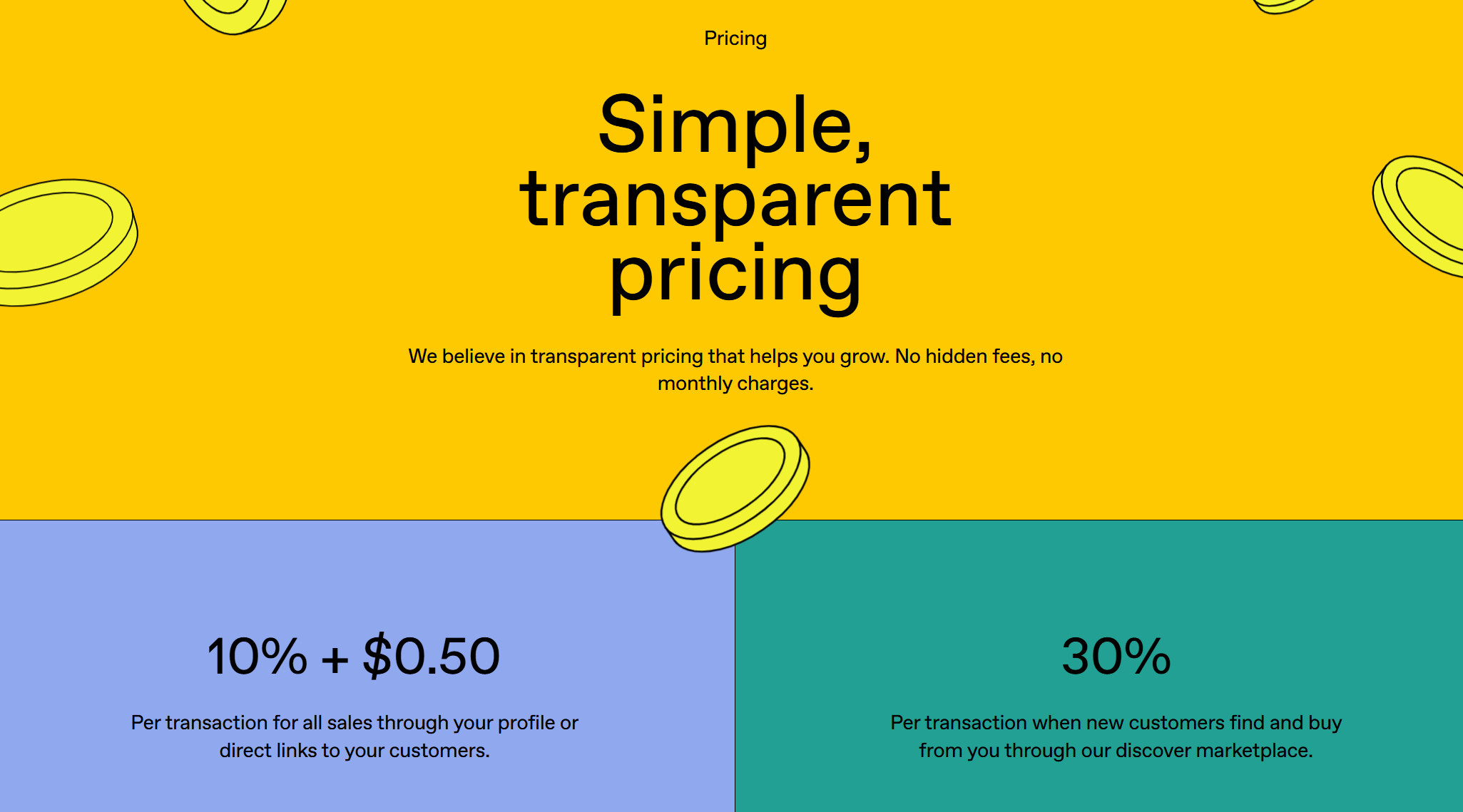
Price: Free to start, 10% + $0.50 per sale (30% if you want placement on their Discover marketplace)
Stan Store
What it does: Built for social media creators. It gives you a beautiful link in bio, funnels, upsells, booking, and livestream shopping all integrated.
Best for: Instagram and TikTok creators who want to monetize their audience without leaving social media.
Price: $29/month (Creator) or $99/month (Creator Pro), with 0% transaction fees
Shopify
What it does: The industry standard ecommerce platform. Massive app ecosystem, endless customization, but requires more setup and ongoing learning.
Best for: Established businesses scaling from 6 to 7 figures, or those selling both physical and digital products at volume.
Price: From $29/month (Basic), plus payment processing fees around 2.9% + $0.30
Storelib
What it does: An all in one platform combining a link in bio tool, store builder, marketplace, and course and membership features. Built for creators who want everything integrated.
Best for: Creators wanting simplicity like Gumroad but more features like Stan Store, without Shopify's complexity.
Price: Free plan available, paid plans scaling with growth, with 0% transaction fees on paid plans

The Pricing Breakdown That Actually Matters
Here's where most comparisons fail. They show you the platform fee but ignore what you actually pay based on your revenue. Let me fix that.
The table below shows your total costs at different revenue levels. This includes platform fees, payment processing, and any transaction percentages. This is what matters for your actual business.
| Monthly Revenue | Gumroad Cost | Stan Store Cost | Shopify Cost | Storelib Cost |
|---|---|---|---|---|
| $500 | ~$75 | $29 | $29+ | Free to $19 |
| $2,000 | ~$250 | $29 | $29+ | $19 to $49 |
| $5,000 | ~$575 | $29 | $79+ | $49 to $99 |
| $10,000 | ~$1,050 | $99 | $79+ | $99 to $199 |
Feature by Feature Comparison
Let's look at what actually matters when you're choosing a platform. Here's the complete feature breakdown:
| Feature | Gumroad | Stan Store | Shopify | Storelib |
|---|---|---|---|---|
| Digital Products | Yes | Yes | Yes (needs apps) | Yes |
| Physical Products | No | Limited | Yes | No |
| Courses | Partial | Yes | Yes (needs apps) | Yes |
| Memberships | No | Yes | Yes (needs apps) | Yes |
| Bookings | No | Yes | Yes (needs apps) | Yes |
| Link in Bio | No | Yes (built in) | No | Yes (OnePage) |
| Marketplace | Yes (Discover) |

Store Design and Customization
How your store looks matters. Customers judge your business in milliseconds.
Gumroad
Gumroad keeps things minimal. Your store page is simple and straightforward, which is honestly perfect if you're just selling one or two digital products. However, if you want your brand to stand out visually, you're limited. You can add a cover image and description, but that's about it.
The upside: simplicity means fast setup. The downside: all Gumroad stores look basically the same.
Stan Store
Stan Store gives you a mobile first, visually engaging storefront. It looks beautiful out of the box and feels like a proper store, not a file repository. You can customize colors, layouts, and add branding. The platform assumes you're selling to social media audiences, so it's optimized for mobile scrolling and discovery.
On the Pro plan, you get custom domains, which matters for brand credibility.
Shopify
Shopify offers infinite customization through themes and apps. You can make your store look however you want, but this flexibility requires learning or hiring a developer. A basic Shopify setup takes longer than Stan Store or Storelib, but the final result can be exactly what you envision.
The trade off: more control, more complexity.
Storelib
Storelib uses drag and drop builders and AI powered tools to make design easy without coding. Your storefront looks modern and professional, with customization that doesn't require technical skills. Custom domains come standard, and the OnePage link in bio feature integrates with your store seamlessly.
It hits the sweet spot between Gumroad's simplicity and Shopify's complexity.
Marketing and Discovery
Here's something most platforms don't talk about enough: how do customers actually find you?
Gumroad's Discover Marketplace
Gumroad's Discover lets customers browse products by category. If your product gains traction, you might get featured. The catch: it takes 30% of the sale, and there's no guarantee your product will ever be visible. It's organic discovery, but limited.
Stan Store's Social Focus
Stan Store assumes your audience comes from Instagram and TikTok. It doesn't have a marketplace, but it has built in features like livestream shopping and funnels that help you convert existing followers. If you already have an audience, Stan Store maximizes that. If you don't, you're starting from zero.
Shopify's Reality
Shopify doesn't help you find customers. You need to drive traffic through paid ads, SEO, social media, or email marketing. This is why Shopify works best when you already have a business model and audience. It's a sales engine, not a discovery engine.
Storelib's Dual Approach
Storelib has both a marketplace for organic discovery and tools for selling to your existing audience. Like Gumroad, creators can find new products they like. Like Stan Store, you can use link in bio to sell directly to your followers. You're not locked into one growth strategy.
Who Should Actually Use What
Enough comparison. Let's cut to the decision.
| You Are... | Best Platform |
|---|---|
| Solo creator selling ebooks, music, or art | Gumroad |
| TikTok or Instagram creator with existing audience | Stan Store |
| Creator who wants everything integrated in one place | Storelib |
| Selling both digital and physical products at scale | Shopify |
| Offering courses, memberships, and coaching | Storelib or Stan Store |
| Need marketplace discovery without high fees | Storelib |
| Want 0% transaction fees | Stan Store or Storelib |
| Building a brand with custom domain and design | Storelib or Shopify |
| Starting out with very low revenue | Gumroad (if just selling one product) or Storelib (if you want to grow) |
The Real Differences That Matter
Transaction Fees Are a Killer
Gumroad's 10% fee sounds innocent until you do the math. At $5,000 monthly revenue, you're paying $575 in fees. Storelib and Stan Store charge 0%, which means more money in your pocket. This matters when you're bootstrapping.
Think about it this way. If you sell a $25 ebook on Gumroad, you lose $3 per sale. Sell 200 copies in a month and that's $600 gone. On Storelib or Stan Store, that $600 stays in your account. Over a year, that's $7,200 you keep. That's not a rounding error. That's your marketing budget, your next product launch, or your emergency fund.
Link in Bio Is Becoming Essential
If you're on social media, a link in bio tool matters. Gumroad and Shopify don't have this built in. Stan Store made their fortune on it. Storelib includes it as OnePage, giving you one place to send traffic.
Why does this matter so much? Because the link in bio is where attention converts into revenue. When someone sees your TikTok or Instagram post and clicks through, that first page they land on determines whether they buy. Having a separate Linktree that sends people to a separate Gumroad page creates friction. Each redirect loses buyers. A platform like Storelib or Stan Store keeps everything in one flow, which means more people actually complete the purchase.
Marketplace Discovery Isn't the Same Everywhere
Gumroad's Discover marketplace works, but you pay 30% for visibility. Storelib's marketplace is newer, but creators are finding products organically without paying extra fees. This matters if you want passive discovery.
Here's why marketplace matters more than most creators realize. When you only sell through your own audience, your income is capped by your following. A marketplace exposes your products to people who have never heard of you. It's the difference between running a store on a quiet side street and having a storefront in a busy mall. Gumroad understood this early, which is why Discover exists. Storelib is building the same thing but without the 30% tax on your sales.
One Platform vs Multiple Apps
Shopify requires apps for courses, bookings, and advanced features. That means more monthly costs, more logins, more headaches. Storelib and Stan Store include these features natively. Gumroad keeps it simple but limited.
The hidden cost of Shopify's app ecosystem is rarely discussed. Most digital product sellers end up installing 3 to 5 apps just to match what Storelib or Stan Store offer out of the box. A digital downloads app runs $10 to $30 per month. A course platform app is another $20 to $50. An email capture tool, booking system, membership gating: each one adds cost and complexity. By the time you're done, your $29 Shopify plan is costing you $100 to $150 per month, and you're managing five different dashboards.
Getting Started Speed
Time to first sale matters more than people think. With Gumroad, you can be live in under 10 minutes. Upload a file, set a price, share the link. Done. Stan Store takes a bit longer because you're setting up your full link in bio page, but you can be selling within an hour. Storelib sits in a similar range: the drag and drop builder means you can have a professional store with a OnePage link in bio ready in under an hour.
Shopify is a different story entirely. Setting up Shopify for digital products specifically takes most people a full weekend. You need to choose a theme, install a digital delivery app, configure payment settings, set up your domain, and figure out the admin panel. It's powerful once it's running, but the setup time is a real consideration for solo creators who want to test an idea quickly.
International Payments and Tax Compliance
If you're selling globally (and you should be, digital products have no borders), payment processing matters. Gumroad became a Merchant of Record in 2025, meaning they handle VAT, GST, and sales tax for you. That's genuinely valuable if you don't want to deal with international tax compliance.
Storelib processes payments in 135 plus countries, letting customers pay in their local currency. This removes a huge barrier for international buyers who might abandon a cart if they see prices only in USD. Stan Store handles payments through Stripe, which covers most major countries but isn't as globally inclusive. Shopify has Shopify Payments in select countries and supports third party gateways elsewhere, but digital tax compliance requires additional apps or services.
.png)
The Verdict
If you're starting with one digital product and want zero setup friction: Use Gumroad. Period. You'll be live in 10 minutes.
If you're a creator with an existing social media audience: Stan Store wins. The link in bio integration and social features pay for themselves through conversions.
If you want one platform that does everything without overly complicated: Storelib is the answer. It combines Gumroad's simplicity, Stan Store's features, and Shopify's customization without the overhead of learning a complex system.
If you're scaling a multi product, multi format business: Shopify is worth the complexity. You'll grow into it.
The real winner for most creators in 2026? Storelib. It's designed for how creators actually work today: they want marketplace discovery, link in bio, customization, and zero transaction fees, all without becoming developers. It's the platform that finally asks "what do creators actually need?" instead of forcing them into ecommerce or content boxes.
Final Thoughts
Choosing a platform is about understanding what you're actually building. Are you testing a business idea with minimal risk? Gumroad works. Do you have fans who'll follow you anywhere? Stan Store. Building a brand that needs customization and growth potential? Storelib. Scaling to multiple product types and massive volume? Shopify.
The best platform isn't the most popular one. It's the one that matches how you actually work and where your customers actually are.
Pick one, launch this week, and optimize later. The cost of waiting is higher than the cost of choosing wrong.

More in Strategy
Start your online business!
Turn your digital creations into income. Launch your store in minutes, no credit card required.